

Understanding your options
Replacing a tooth starts with its foundation.
A dental implant is placed in the jawbone and can support a crown, bridge or denture. The visible replacement tooth is a separate part of the restoration.
Implants involve surgery and are not suitable for every situation. Assessment considers your medical history, available bone, gum health and ability to maintain the area.
What to discuss with Dr Cos
- Implants compared with a bridge, denture or other options.
- Whether any preparatory care or additional procedures are needed.
- Healing, risks, total costs and long-term maintenance.
The process
How it works.
Assess & plan
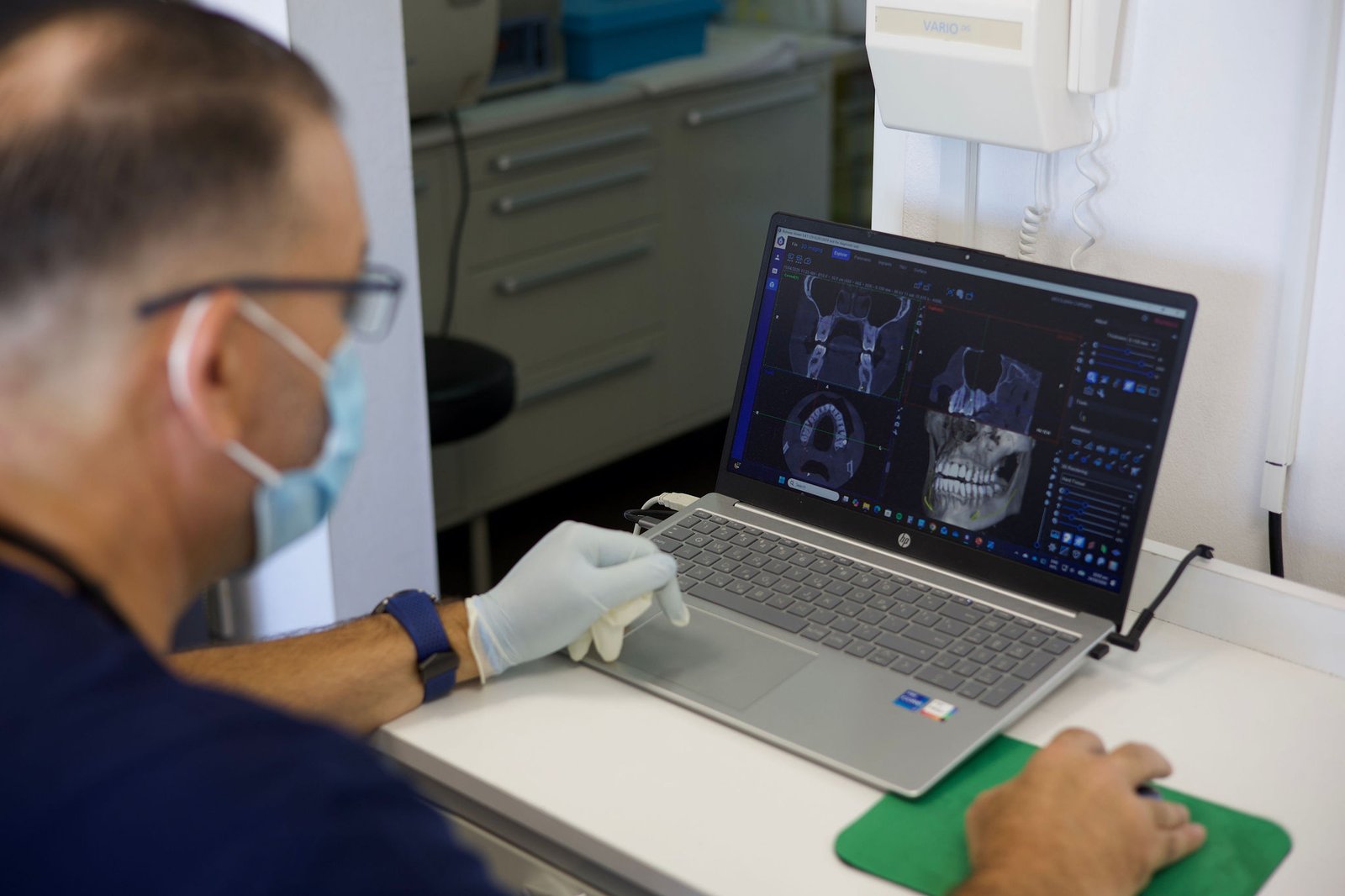
Examination and appropriate imaging help assess the site. Your dentist explains suitability, alternatives and the stages of a proposed plan.
Place & allow healing
The implant is placed and healing is monitored. The timing and any temporary replacement depend on your individual circumstances.
Restore & maintain
Once ready, the planned replacement tooth or teeth are fitted. Ongoing cleaning and reviews remain essential after the restoration is complete.
Looking ahead
An implant still needs care.
Implants can develop inflammation and lose supporting bone if problems arise around them. Follow your cleaning and review plan, and report bleeding, swelling, discomfort or movement.
Common questions
A little more clarity.
Is the implant the whole replacement tooth?
The implant replaces the root. A crown or another restoration is attached to provide the visible tooth or teeth.
Can everyone have an implant?
No. The site and your wider health must be assessed. Sometimes preparation is needed, or another replacement may be more appropriate.
How long will the process take?
Treatment is often staged over a period of healing. Ask for a personal timeline rather than assuming a same-day result.